
New-build gardens
New-build garden landscaping in Norwich
Norwich Landscapers landscapes new-build gardens across Norwich and its growing estates, turning the bare plot a developer leaves behind into a lawn, patio and planted garden that drains and grows the way it should.
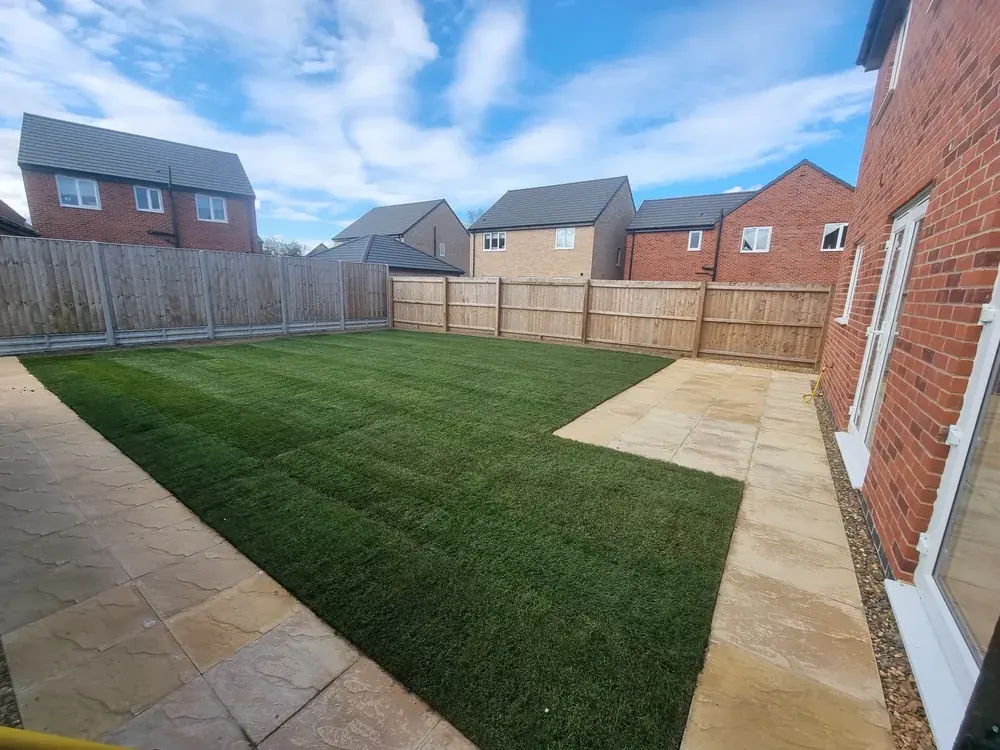
Why new-build gardens need more than new turf
New homes around Norwich often come with a garden that is finished in name only. A thin layer of topsoil is spread over ground that site machinery has driven over for months, a quick lawn and a small slab patio go down, and the plot is handed over. Underneath there can be buried brick, concrete washings, stones and clay packed hard. The result is a lawn that puddles in winter, browns in summer and never quite looks right.
A new-build garden project starts by dealing with that ground. Compaction is broken up, builders' debris dug out and the soil improved before anything new is laid. From there the space can be shaped into what you actually want: a bigger patio that fits a table, a proper lawn, borders along the fence line, a path to the shed and screening for privacy.
It is work for first-time buyers, families settling into a new estate, and anyone a year or two in who has realised the developer's garden is not going to get better on its own.
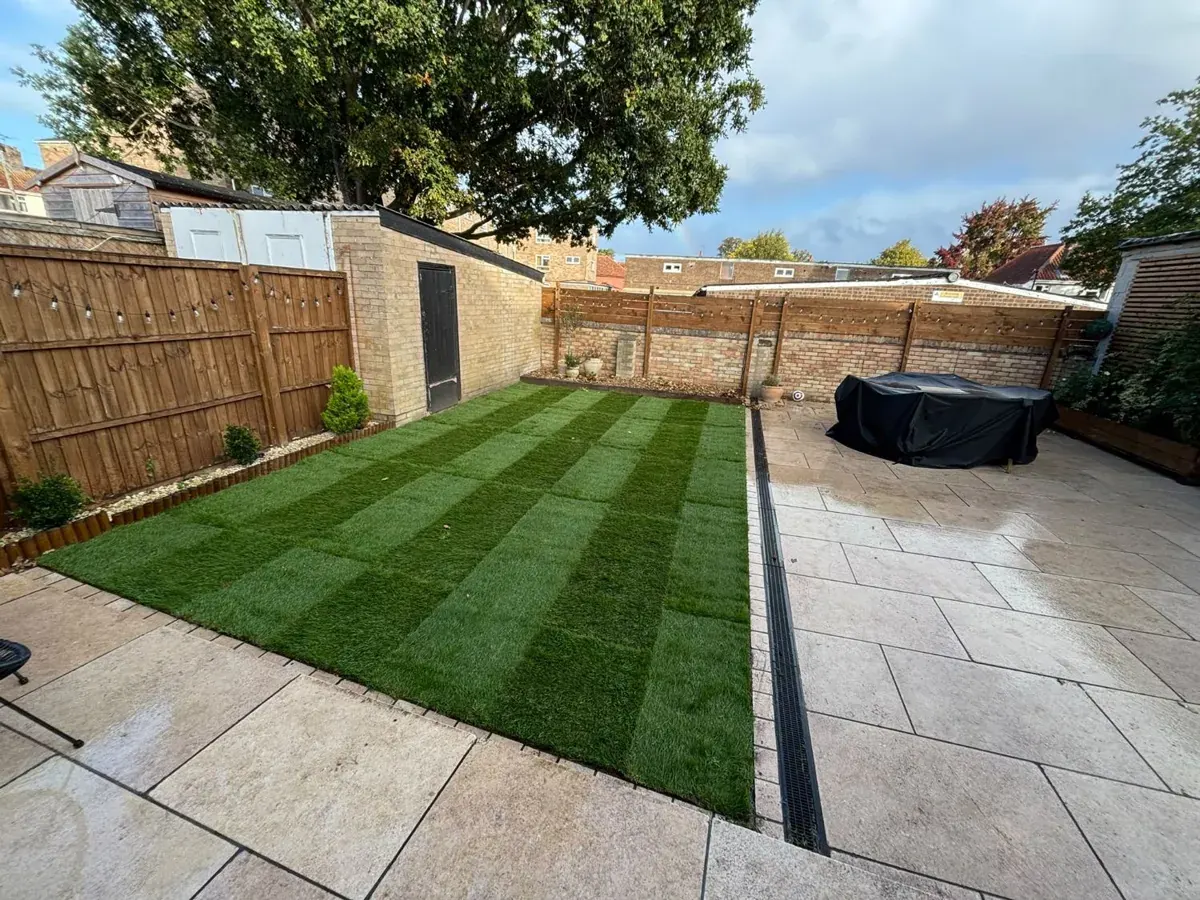
What a new-build garden project includes
The ground comes first, then the parts of the garden you will use and see.
-
Test digs
A look under the turf in a few places to see what the build left behind.
-
Rubble and compaction
Buried debris removed and compacted ground broken up so water and roots can move.
-
Better soil
Topsoil and soil improver added where the existing layer is too thin or poor.
-
Levels and falls
Ground shaped so water runs away from the house and off the lawn.
-
A patio that fits
A larger or better-built patio on a proper sub-base, sized for the way you live.
-
A real lawn
New turf laid on the improved ground rather than on the old compacted layer.
-
Borders and privacy
Beds, raised sleeper beds and screening along exposed boundaries.
What to check before you plan
-
Read the property paperwork
New estates often have covenants about front gardens, boundary heights or what can be built. Check your transfer deed and any management company rules before planning changes.
-
Find out who owns each fence
The boundary plan in your deeds shows which fences are yours to maintain. It matters if you want to replace, raise or add to one.
-
Know where the services run
Drains, inspection chambers and cables run under many new gardens. Make a note of manhole covers and any service plans you were given, so they stay reachable.
-
Raise defects with the developer first
If you are still within the developer's snagging period, problems such as standing water may be theirs to put right. Report them before landscaping over them.
Good to know about new-build plots
-
Clay is common
Many developments around Norwich sit on clay, which compacts badly under machinery and holds water. Breaking it up and improving it is often the single biggest improvement you can make.
-
Developer turf is often thin
Turf laid at handover frequently sits on very little topsoil. Laying a new lawn on properly prepared ground is often better value than trying to rescue it.
-
Manholes must stay reachable
Inspection chambers have to stay accessible. They can be framed neatly into a patio or lawn rather than buried.
-
Overlooked gardens benefit from height
Estates are often built close together. Trellis, taller planting, raised beds and well-placed trees soften the view in both directions.
How a new-build garden is put right
- 1
Tell us about the plot
Send the form with your postcode and what bothers you about the garden now: puddles, bare patches, no privacy.
- 2
Visit and test digs
We see the garden, check what is under the surface and talk through what you would like.
- 3
Plan and free quote
A clear plan and price, with the ground work set out separately from the finishing.
- 4
Ground first
Rubble out, compaction broken up, soil improved and levels set.
- 5
Build and hand over
Patio, beds and lawn completed, then a walk round and aftercare advice.
Questions
New-build garden questions
Something else on your mind? Ask us and we will give you a straight answer.
Why is my new-build lawn always waterlogged?
Usually because the ground underneath was compacted by machinery during the build and the water has nowhere to go. Breaking up the compaction and improving the soil fixes the cause, not just the turf.
Should I wait before landscaping a new garden?
There is no need to wait long, but living with the garden through some wet weather first shows you where water sits, which helps with the plan.
Can you extend the patio the developer laid?
Often, yes, although developer patios are sometimes laid on a thin base. We check how it was built and tell you honestly whether extending it or replacing it makes more sense.
Will you remove rubble buried in the garden?
Yes. Builders' debris found while preparing the ground is dug out and taken away as part of the job.
How can I make my garden more private?
Taller planting, raised beds, trellis on top of fences and well-placed trees all add privacy, within the height limits that apply to garden boundaries.
Do I need permission to change a new-build garden?
Most back garden landscaping needs no planning permission, but some estates have covenants or planning conditions about front gardens and boundaries, so check your paperwork first.
Related services
-
Garden makeovers
A whole garden planned and rebuilt as one job: clearance, levels, patio, lawn, beds and boundaries.
Read more -
Garden clearance
Overgrown and neglected gardens cut back, cleared and taken away, ready for whatever comes next.
Read more -
Sleeper beds and raised beds
Timber sleeper beds for vegetables, borders, edging and terracing a sloping garden.
Read more
Turn the developer's plot into your garden
Send us your postcode and a few words about the garden. We will visit, look under the surface and give you a free quote.
Free quotes · No subcontracting · Based in Drayton, Norwich